tl tm1HomeseFeedbackseSite MapsePrivacy Statement
Logo
For Healthcare Professionals
Hope For Healing Even The Most Resistant Ulcers
What is Apligraf®? What is Apligraf? Find Apligraf Insurance Coverage Wound Facts and Prevention Read/Share Healing Stories Contact Us Support and Resources Tell a Friend Take a Survey
What is Apligraf®?What is Apligraf®?
Increase Text SizeDecrease Text Size

Apligraf® is a unique, advanced treatment for healing. It is created from cells found in healthy human skin. Which explains why it looks like a thin, piece of real skin.

It is used to heal ulcers such as diabetic foot and venous leg ulcers that are not healing after 3-4 weeks, despite treatment with conventional therapies.

When healthy skin gets wounded, the proteins and growth factors in the skin stimulate the body to regenerate new skin. This is the normal wound healing process.1

However with certain diseases (like diabetes and circulatory problems), the skin is missing these biological substances, and the healing cycle is broken. This leads to the development of non-healing ulcers and wounds.2,3

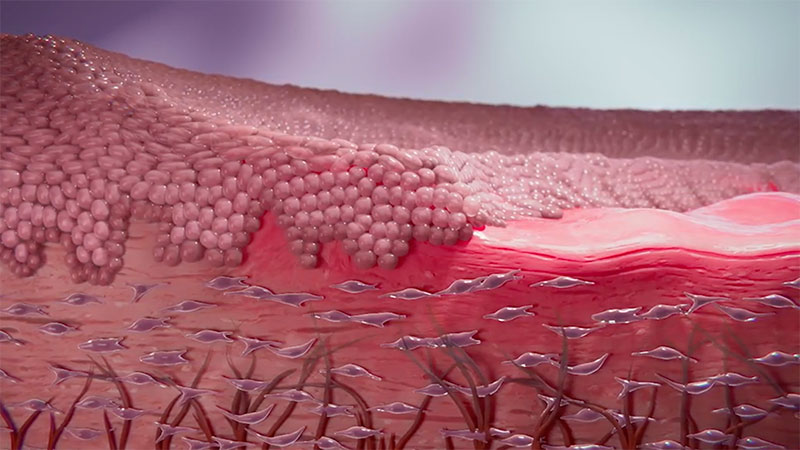
Apligraf® contains two types of cells – an outer layer of protective skin cells, and an inner layer of cells contained within collagen. Both types of cells contain substances similiar to those found in human skin. Apligraf® does not contain certain things in skin such as hair follicles, sweat glands or blood vessels.

Apligraf® plays an active role in healing by providing to the wound living cells, proteins produced by the cells, and collagen, which are important for healing.

How is Apligraf® different from other wound therapies?

Apligraf® is different because it is NOT a cream, ointment, or traditional wound dressing. It is a living treatment made to treat non-healing ulcers.

Apligraf® is placed directly on the wound.

The wound is then covered with a non-adhesive dressing to keep Apligraf® in place. The area is then wrapped with other dressings that are changed weekly by the doctor or nurse. The healing process now begins, and improvement of the wound can usually be seen within weeks.

Many wound therapies, like dressings and antibacterial treatments, are designed to manage a wound until the body heals itself. Apligraf® plays a more active role in the wound healing process. Apligraf® delivers to the wound living cells, proteins produced by the cells, and collagen which are important for healing.

Apligraf® is a prescription product that must be applied by a medical professional. It is not available in pharmacies nor can it be purchased online. To use our locator to find a Wound Care Center with Apligraf® experience nearest you, click here.

         Which Wounds Does Apligraf® Treat?

         Learn about Diabetic Foot Ulcers

         Learn about Venous Leg Ulcers

         How Apligraf® Works

         The Science behind Apligraf®

         Clinical Experience

How does Apligraf® Compare?

How is Apligraf® Applied?

After Care/ What to Expect?

Safety Information


rh

References:

1. Kane DP, Krasner D. Wound healing and wound management. In: Krasner D, Kane D, eds. Chronic Wound Care: A Clinical Source Book for Healthcare Professionals. 2nd ed. Wayne, Pa: Health Management Publications Inc; 1997:1-4.

2. Capeheart JK. Chronic venous insufficiency: a focus on prevention of venous ulceration. J Wound Ostomy Continence Nurs. 1996;23:227-234.

3. Falanga V, Sabolinski ML. A bilayered living skin construct (Apligraf®) accelerates complete closure of hard-to-heal venous ulcers. Wound Repair Regen. 1999;7:201-207.

4. Veves A, Falanga V, et al. Graftskin, a human skin equivalent, is effective in management of non-infected neuropathic diabetic foot ulcers. Diabetes Care.
2001;24:290-295.

Apligraf® heals more sores.Find Apligraf
Top of Page
 
bo1HomeseFeedbackseSite MapseCalifornia Compliance Law DeclarationsePrivacy Statement